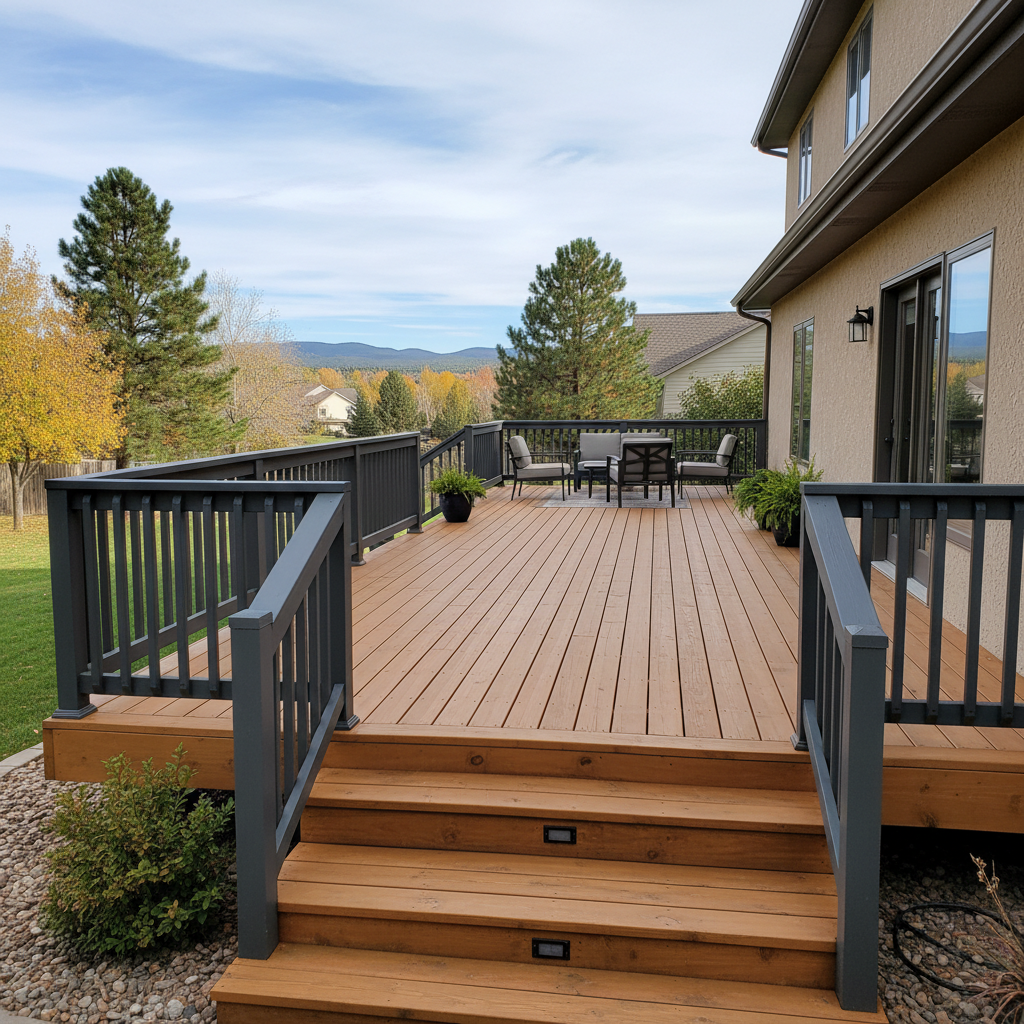
Alright, let's talk decks. Specifically, staining and painting them. I've been doing this a long time here in Rapid City, and I've seen just about every mistake you can imagine when folks try to tackle this themselves or hire the wrong crew. You want your deck to look good and last, right? So let's cut to the chase on what to watch out for.
Mistake #1: Skipping the Prep Work
This is probably the biggest one, and it's a killer. You can buy the fanciest stain or paint on the planet, but if you slap it onto a dirty, moldy, or improperly prepped surface, it's going to fail. Fast. I'm talking peeling, flaking, uneven color – the works.
- Not cleaning thoroughly: You need to power wash, but not too aggressively that you fuzz up the wood. Then, use a good deck cleaner to get rid of mildew, algae, and old, dead wood fibers. Don't just hose it down.
- Not letting it dry: Wood needs to be bone dry before you apply anything. If you stain a wet deck, that moisture gets trapped, and you're inviting rot and peeling. Here in Rapid City, even after a good summer rain, it can take a few days of dry, sunny weather for a deck to be truly ready.
- Not stripping old finishes: If your deck has a peeling paint or stain, you can't just go over it. You need to strip it down to bare wood. It's a pain, I know, but it's non-negotiable for a lasting finish.
Mistake #2: Choosing the Wrong Product for the Job (or the Climate)
Walk into any hardware store, and you'll see a wall of deck finishes. It's overwhelming, and it's easy to grab something that sounds good but isn't right for your deck or our climate. We get some pretty brutal winters and hot summers here in the Black Hills, and that takes a toll.
- Paint vs. Stain: Paint looks great initially but tends to peel more easily on horizontal surfaces like deck floors because it forms a film on top of the wood. Stains, especially penetrating ones, soak into the wood, offering better protection against foot traffic and weathering. For most decks, I recommend a good quality semi-transparent or solid stain.
- Bargain Bin Buys: You get what you pay for. Cheap products don't have the UV inhibitors, mildewcides, or binders that higher-quality products do. They'll fade faster, peel sooner, and you'll be redoing it in a year or two. Spend a little more upfront; it saves you a lot in the long run.
- Ignoring Manufacturer Specs: Every product has specific instructions for application, temperature ranges, and recoat times. Don't guess. If it says apply when temperatures are between 50-90 degrees, don't try to stain your deck when it's 40 degrees out or 100. It won't cure right.
Mistake #3: Hiring the Cheapest Bid Without Asking Questions
This is where I see a lot of folks get burned. Everyone wants a good deal, but sometimes that